A familiar character can change the way a customer chooses an ice cream. Flavor, weight, and price still matter, but a recognizable film icon, mascot, or cultural landmark gives the product another source of appeal. Customers may buy it because they follow the character, want a souvenir of a visit, or want to photograph the shape before eating it.
For a retailer, that creates room to sell a vanilla or strawberry bar on more than its price per ounce. The product carries a design that customers recognize and may be willing to pay more for. Its appearance can also travel beyond the store through photographs shared on social media.
Turning that appeal into a commercial product requires coordination between the rights holder, buyer, and manufacturer. The approved artwork must become a shape that can be molded and released without damage. The formulation must suit the destination market, and the finished ice cream must travel through a controlled cold chain.
For food importers, retail chains, theme parks, and brand owners, the project therefore starts before a production quote. Establishing the rights, choosing the manufacturing model, and planning the shipment together gives the factory a clearer brief and the buyer a more practical route to launch.
1. Why retailers choose licensed 3D ice cream
A brand identity that remains after unwrapping
A conventional flat ice cream bar relies heavily on packaging graphics to attract attention. Once the wrapper is removed, a standard shape has little visual connection to the character on the pack. A molded 3D product carries that connection into the eating experience: the character, logo, or landmark is part of the food itself.
This is especially relevant for theme parks, museums, and other destinations where the product can reflect what the customer has come to see. A custom shape gives the venue a product associated with that visit. Specialty grocery chains and pop-up events can use the same approach to build an assortment around a particular design or licensed property.
Social sharing and retail pricing
Detailed 3D ice cream can work as an edible collectible. Customers photograph the shape before taking the first bite and share it on TikTok, Instagram, and RedNote. Those posts generate unpaid user-generated content (UGC), extending the product’s visibility beyond the people standing at the freezer.
The appeal combines the quality of the molded detail with recognition of the design. A face, hat, or fruit texture needs to remain visible when the customer opens the package. The same details that make the product recognizable also give customers something to photograph.
Licensed or proprietary 3D novelties routinely command retail prices 30% to 100%+ higher than standard extruded ice cream bars of equivalent weight. That price premium is one reason buyers consider the category alongside conventional frozen products.
Custom shapes can also support channel exclusivity. A product developed for a particular theme park, museum, event, or retail chain gives that channel an offer that a generic private-label bar cannot reproduce. The commercial arrangement behind that exclusivity depends on who owns the design and what rights the parties agree.
2. Three models for a 3D ice cream project
Before discussing tooling, identify where the intellectual property originates and who holds the commercial rights in the destination territory. A buyer bringing an officially licensed character has a different starting point from an importer selecting a manufacturer’s existing fruit shapes.
Client-owned or licensed IP: OEM
In an OEM project, the buyer owns the mascot or brand logo, or has an official license to use an entertainment property. This may be an anime, game, or film character. The buyer contracts a specialized factory to turn that design into a finished 3D ice cream product.
This model suits theme parks with their own mascots, entertainment brands, established retail chains, and licensed food distributors. The buyer supplies the IP basis for the project; the manufacturer handles the product engineering and production needed to reproduce it in frozen form.
Before mold tooling begins, the buyer must provide a valid Certificate of Authorization or License Agreement covering the target sales territory. Having access to artwork does not establish the commercial authorization described in that agreement. The factory needs the rights documentation as well as the design files before proceeding with the licensed shape.
The character’s style guide then becomes the reference for development and approval. It gives the production team a basis for evaluating how closely the molded product matches the authorized appearance.
Factory-original proprietary shapes: ODM
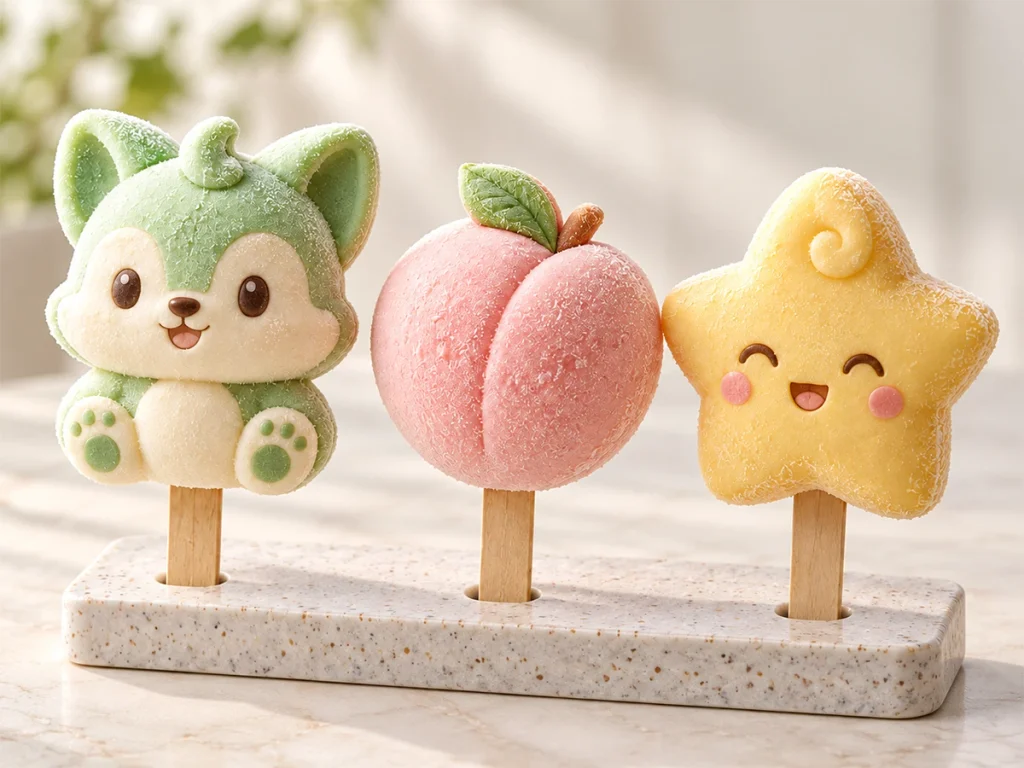
In an ODM project, the manufacturer has developed the original shape and owns the relevant copyright or design patents. The range may include realistic fruit, animals, festive icons, and geometric designs that attract attention online.
These products carry no third-party entertainment royalties. Importers, supermarket private labels, and distributors can select an existing design instead of starting with a licensed character and commissioning a new mold concept. This makes ODM suitable for buyers seeking faster market entry without entertainment royalty fees.
The rights still need attention. Confirm the manufacturer’s design registrations and the rights needed to distribute the product in your local market. The absence of an entertainment royalty does not replace that check.
For a buyer whose priority is assembling an initial range, an existing factory-original catalog also provides a practical starting point for discussing the product mix. Ready-to-ship designs can be considered alongside the full-container order requirement.
Co-branding or regional exclusivity
A distributor can also work with a manufacturer to adapt an existing 3D mold concept, add localized packaging, and agree exclusive distribution rights for a country or retail channel.
This model suits regional food and beverage distributors that want exclusive access to a popular shape. The manufacturing starting point is an existing concept, while the local packaging and distribution arrangement shape how the product reaches customers in that market.
Maintaining territorial exclusivity requires minimum annual volume commitments, typically measured in 40ft High Cube reefer containers. The buyer therefore needs to consider the exclusive territory or channel together with the volume it can support over the year.
3. From 2D artwork to a product that can be manufactured
A design that looks right on screen still has to work as frozen food. Ice cream must release cleanly from a sub-zero metal mold while retaining facial features, ears, and other delicate parts. Its structure must remain intact through production and handling.
These requirements differ from plastic injection molding. The development team must interpret the IP owner’s 2D style guide in a material with its own filling, freezing, and demolding constraints.
Review the style guide and develop the 3D CAD model
Industrial designers use character turnaround drawings to build a three-dimensional digital model. The model translates the character’s approved views into the surfaces and proportions that the mold will reproduce.
Undercuts and draft angles need particular attention because they affect how the frozen product leaves the mold. A feature may be important to recognition but fragile during release. The designers adjust the geometry so those details can survive demolding while remaining faithful to the character.
This stage connects the brand reference to the production process. The digital model has to represent both the approved appearance and a shape the factory can manufacture.
Calibrate the colors and filling process
A character’s eyes and hat, or the layers of a fruit-shaped product, may require different colored mixes in separate areas of the mold. Automated dosing nozzles place ice cream or water-ice slurries into those zones.
The factory controls viscosity, temperature, and filling timing to keep the colors distinct. The task involves the placement of each mix as well as the selection of its color. Clear boundaries help the finished product retain the visual details shown in the approved design.
Make molds for the production line
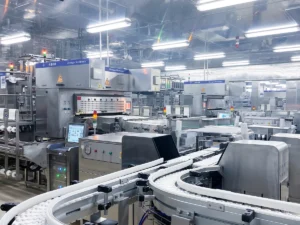
High-precision food-grade metal molds are engineered for rotary or inline 3D novelty lines. These molds are complex and calibrated to the production equipment on which they will run.
For a finished-product sourcing project, the factory manages the tooling and production, and the buyer imports retail-ready ice cream. The complexity of the supporting molds and their relationship to the production line help explain why a finished-product supplier may keep these activities within its manufacturing operation. Buyers looking for machinery should confirm the supplier’s business scope separately; a finished-product export project does not include equipment supply.
Keeping those activities together supports consistent production quality and control over the use of the IP. The project is developed around the product the buyer will receive and sell in the destination market.
Obtain the licensor’s prototype approval
Before mass production, samples are photographed and evaluated against the IP holder’s brand guidelines. The review covers color accuracy, the use of natural or compliant food colorings, flavor, and the fidelity of the finished shape.
The prototype brings the earlier development decisions together. It shows how the digital design, mold geometry, and filling process translate into an actual frozen product. The licensor can assess the result against the approved character before the project moves into production.
4. IP verification and control of custom shapes
For a famous cartoon, film character, or brand mascot, the factory requires documented licensing rights for the destination market before production. This verification belongs at the start of the project, before the buyer commits to developing the licensed shape.
Custom tooling for a buyer’s own proprietary IP raises a separate question: who may use that shape after the mold has been made? If the buyer funds the tooling, a non-disclosure and mold-exclusivity agreement should prohibit sales of the custom shape to third-party buyers.
The rights documentation and the mold arrangement address different parts of the relationship. The first establishes permission to produce for the target market. The second records the agreed restriction on supplying the buyer’s custom design to others.
5. Choose the formulation for the destination market
Food import requirements vary by country, so the destination market needs to be part of the manufacturing brief. A formulation selected without reference to that market may create an obstacle after the visual development work is already under way.
For Chinese dairy exporters and trading companies, access to European markets is particularly difficult. The European Union applies a demanding Sanitary and Phytosanitary (SPS) framework, alongside national and establishment approval requirements for dairy imports.
Plant-based 3D ice cream is an option for European sourcing projects. Oat, coconut, and soy are options for the base. These formulations can retain sharp molded details and a creamy mouthfeel while reducing dairy-related import obstacles. They also appeal to consumers seeking vegan products.
The choice of base therefore belongs in the early discussion of the product. Buyers should identify their destination and whether they are seeking a dairy formulation or a compliant plant-based version when requesting a quote.
6. Protect the finished product through the cold chain
Why heat shock matters
Ice cream depends on a fine microscopic structure for its smooth texture. Temperature fluctuations can cause small ice crystals to melt and refreeze into larger, coarser particles, even when the product remains below freezing.
This process, known as heat shock, permanently damages the creamy mouthfeel. For a detailed 3D product, it can also distort the fine lines that make the character or shape recognizable. The visual work completed during development therefore depends on temperature control during delivery as well as during production.
The delivery plan should include cold-chain tracking from factory dispatch to the destination port, with temperature data logging throughout the journey. The shipment must remain at -18°C (0°F) or below. The aim is to deliver the product in its factory condition, preserving both its texture and its molded detail.
Dedicated containers and FCL shipping
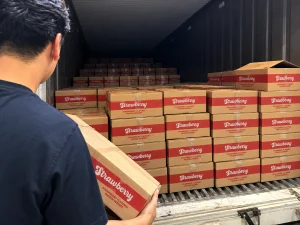
Dedicated refrigerated containers allow finished ice cream to travel as a Full Container Load (FCL). For suppliers operating on an FCL-only basis, small orders cannot be shipped as Less than Container Load (LCL) consignments. Consolidation and port transfers introduce risks of temperature fluctuations and cross-contamination with other foods, which explain the need for dedicated containers.
A 40ft High Cube (40ft HC) reefer container is a recommended option for freight efficiency and a stable thermal mass. The transport plan needs to accommodate a full container from the outset, alongside the buyer’s choice of products.
International courier services such as DHL, FedEx, and UPS cannot be assumed to provide the environment of -18°C or below needed to preserve ice cream quality throughout international transport and customs clearance. Where that temperature control cannot be guaranteed, courier shipment is unsuitable for ice cream samples.
7. Prepare a clear manufacturing inquiry
A useful inquiry connects the commercial concept with the requirements for development and delivery. Before requesting a quote, prepare the following information.
IP ownership and authorization
State whether you want to select a factory-owned ODM shape or develop an OEM product around your own or licensed IP. If you hold a character license, prepare the authorization covering the sales territory. If you want an existing design, identify the catalog shapes you are considering.
Destination market and formulation
Name the destination market and indicate whether you are seeking dairy ice cream or a compliant plant-based formulation. This allows the formulation discussion to begin alongside the design discussion.
Packaging and branding
Indicate whether you want single-serve pillow packs, window boxes that display the shape, or multipacks for supermarket chains. For co-branded or regional projects, include the localized packaging direction in the brief.
Volume and SKU mix
List the shapes and flavors you plan to combine in the first 40ft HC reefer container. If you are seeking regional exclusivity, consider the annual container-volume commitment as well as the initial shipment.