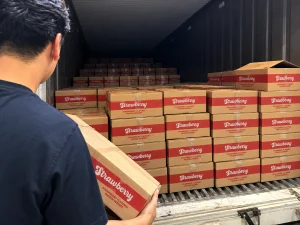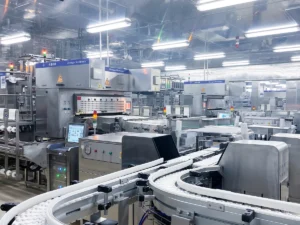
Can a U.S. company import ice cream from China? Yes. The importer must confirm that the product is admissible, assign the proper U.S. compliance roles and protect the frozen shipment from the factory through final delivery.

Several agencies may be involved. FDA regulates most food-safety and labeling matters. U.S. Customs and Border Protection handles the customs entry, while USDA APHIS may regulate milk, egg, gelatin and other animal-derived ingredients.
Start with the product formula. Freight quotes and packaging artwork can wait.
Review every product formula
Request a technical file for each SKU from the Chinese manufacturer. It should cover:
- The complete ingredient list
- Sources and countries of origin for milk, cream, whey, egg and gelatin
- Pasteurization or other heat-treatment records
- Allergens
- Product specifications and shelf life
- Microbiological standards and test reports
- Batch-traceability records
- Storage and transportation requirements
Animal-product restrictions depend on the ingredient, its country of origin and how it was processed. A permit or government certificate may be required.
Check the exact product through the USDA Veterinary Services Permitting Assistant before production. The USDA APHIS animal product import guidance explains where to begin.
Previous U.S. sales do not establish that a new flavor or formula can enter. Review every SKU separately, especially when the recipe contains dairy, egg or gelatin.
Make sure the product name is legal
“Ice cream” has a federal standard of identity in the United States. Conventional ice cream must meet specific requirements for milkfat, nonfat milk solids, total solids and permitted ingredients.
Standard ice cream generally contains at least 10 percent milkfat. Separate calculations may apply when the product contains fruit, nuts or other bulky flavor ingredients.
A dairy product that falls outside the standard may need to be called “frozen dairy dessert.” Plant-based products usually need a name such as “plant-based frozen dessert.” The final name should describe the actual product without implying that it meets a standard it does not meet.
Review the formula, product name and flavor claims together before printing the packaging. The federal ice cream standard appears in 21 CFR 135.110.
Assign the U.S. import roles
Food imports often involve three different parties.
The Importer of Record files the customs entry and is responsible for duties, fees and customs compliance.
The FSVP Importer carries out the Foreign Supplier Verification Program. This party must verify that the Chinese supplier follows applicable U.S. food-safety requirements and must keep records supporting that determination.
The FDA U.S. Agent is the American contact listed in the foreign factory’s FDA registration. The agent handles communications between FDA and the factory.
One business can sometimes fill more than one role, but each responsibility must be accepted separately. Hiring a customs broker does not automatically satisfy FSVP, and appointing a U.S. Agent does not make that agent the Importer of Record.
An FSVP Importer generally must be located in the United States. The entry filing identifies the importer by name, email address and an FDA-recognized Unique Facility Identifier. FDA currently recognizes the DUNS number for this purpose. See the FDA FSVP guidance.
The Importer of Record may also need a customs bond. A single-entry bond may work for occasional shipments. Companies importing regularly often choose a continuous bond. The CBP customs bond guide describes both options.
Check the factory’s FDA registration
A foreign facility that manufactures, processes, packs or holds food for U.S. consumption generally must register with FDA and appoint a U.S. Agent.
Compare the registration details with the commercial documents. The legal name and address should match the commercial invoice, packing list, bill of lading and Prior Notice filing.
FDA registration covers the facility. It does not approve the product, label, importer or shipment. FDA checks imported food for compliance when it is offered for entry. The agency explains this process in its importing human foods overview.
Review the U.S. label before printing
A direct English translation of the Chinese package may miss U.S. requirements.
Depending on the product and package, the retail label may need:
- An accurate product name
- Net quantity in the required units
- Nutrition Facts
- Ingredients listed in descending order by weight
- Major allergen disclosure
- Manufacturer, packer or distributor information
- Storage instructions
- Country-of-origin marking
- Accurate natural or artificial flavor statements
The United States recognizes nine major food allergens. Ice cream formulas commonly involve milk, egg, wheat, soy or tree nuts. Sesame must also be declared when present. FDA maintains current guidance on its food allergen page.
Finish the formula first, complete the label review second and print the packaging last. Reprinting thousands of cups or wrappers is an expensive way to correct a labeling mistake.
Confirm the HTS code and landed cost
Ice cream and other edible ice generally fall under HTS heading 2105, but the full classification depends on the formula and product type. Dairy content and quota treatment can change the applicable subheading and duty calculation.
Chinese-origin products may also be affected by Chapter 99 duties or other trade measures in force on the entry date. Ask a licensed customs broker to confirm:
- The full HTS classification
- Quota treatment
- Dutiable net quantity
- Customs value
- Additional duties
- Merchandise Processing Fee
- Harbor Maintenance Fee
Use the current U.S. Harmonized Tariff Schedule. An old tariff estimate from a previous shipment may no longer apply.
A realistic landed-cost calculation also includes refrigerated ocean freight, customs clearance, reefer drayage, frozen storage and local delivery. Budget for possible inspections, demurrage and temperature-related product loss as well.
File Prior Notice and prepare the entry documents
FDA generally requires Prior Notice before imported food arrives in the United States, unless an exemption applies.
A typical entry file may contain:
- Commercial invoice and packing list
- Bill of lading
- Customs bond
- FDA facility-registration details
- FSVP Importer information
- Prior Notice confirmation
- Product specifications
- APHIS permits or certificates, when required
The product description, quantity, company name and address should match throughout the file. A shipment is easier to clear when the broker does not have to explain why the invoice, FDA record and bill of lading appear to describe different companies or products.
Protect the cold chain
Ice cream does not have to melt completely to suffer permanent damage.
When the temperature rises, some microscopic ice crystals melt. They refreeze as larger crystals when the temperature drops again. The product may still look frozen, but its texture can become coarse or icy. This cycle is known as heat shock.
A commercial shipping plan should specify:
- A dedicated refrigerated container
- A temperature of minus 18°C or below
- Independent temperature data loggers
- Procedures for temperature alarms and port delays
- Refrigerated transport from the terminal
- Delivery to a qualified frozen 3PL warehouse
- Seal and temperature checks at receiving
Standard ocean LCL service creates more handling and temperature exposure, so it is generally unsuitable for ice cream. A dedicated 40-foot high-cube reefer gives the importer better control.
The container does not have to carry a single product. Several approved shapes or flavors can travel in one Mixed-SKU load, provided the total quantity fills the container and every SKU has completed its own formula, label and admissibility review.
A sensible plan for the first shipment
Keep the first import contained. Use one Importer of Record, one customs broker and one frozen warehouse. Confirm each SKU, secure initial demand and ship one Mixed-SKU reefer.
After arrival, review the temperature records, storage expenses, product loss and sales over roughly 90 days. Those results will show whether the next move should be another container, additional SKUs or a wider distribution area.
Pre-shipment checklist
Before the container leaves China, confirm the following:
- Each SKU has completed formula and animal-origin review.
- The Importer of Record and FSVP Importer have accepted their responsibilities.
- The factory’s FDA registration is current.
- The English label has been reviewed.
- The customs broker has confirmed the current HTS classification and duty treatment.
- Prior Notice and supporting documents are ready.
- The reefer, temperature monitoring and frozen warehouse are booked.
Companies that plan to import ice cream from China should complete the regulatory and cold-chain work before production starts. Early review reduces the risk of reprinting packaging, delaying customs clearance or holding a refrigerated container at the port.