
When importers open a container of 3D fruit-shaped ice cream, they expect each product to look as it did when it left the factory. If the cold chain has been unstable, the ice cream may arrive misshapen and grainy. This damage is caused by heat shock, which costs the frozen dessert industry billions in lost product value each year.
3D ice cream depends on a fine structure of microscopic ice crystals, air cells, and fat globule networks. Temperature fluctuations can disturb that structure even when the product remains below freezing.
For distributors and brand owners, controlling heat shock protects product quality and reduces the risk of an unsuccessful seasonal launch or a shipment that cannot be sold.
What is heat shock in frozen desserts?
Heat shock occurs when the temperature inside a frozen product fluctuates. As the product warms, some of the smaller ice crystals melt. When it cools again, the water migrates and freezes onto larger crystals instead of returning to its original state. This process is known as Ostwald ripening.
What heat shock does to 3D ice cream
Shapes such as mangoes, peaches, and custom designs can lose their sharp contours and look partly melted when unpacked. The smooth mouthfeel may become gritty or icy, and damage to the microstructure can shorten the product’s retail shelf life.
Why international shipping raises the risk
Long-distance transport introduces several points where the temperature can rise or fluctuate.
Frozen LCL consolidation cannot provide the same control as a dedicated reefer container. Shared space also brings cross-contamination risks and temperature spikes when the doors are opened.
International express services such as DHL or FedEx are unsuitable for samples or small batches of ice cream because they cannot guarantee a continuous -18°C environment through cross-border transport and customs clearance.
Port transfers are another risk. Without continuous monitoring and strict terminal handling procedures, containers may be exposed to ambient heat during multimodal transfers.
How to reduce the risk in transit
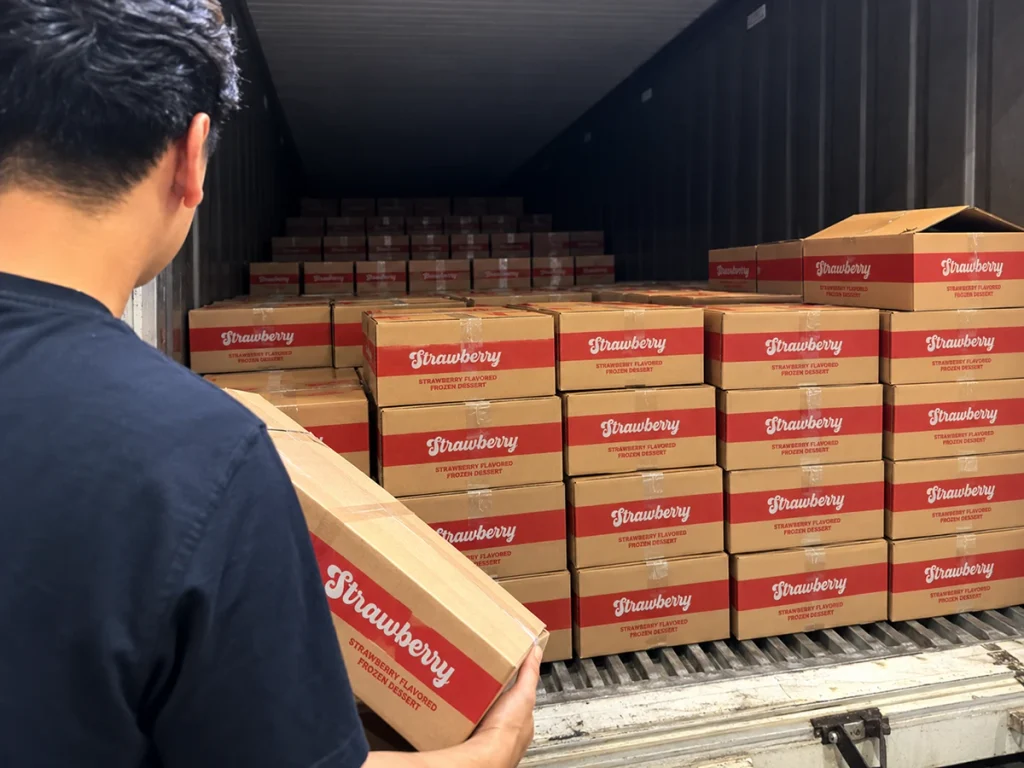
We ship only by full container load in dedicated reefer containers and recommend a 40-foot High Cube (40ft HC) for better loading efficiency and temperature stability. The dedicated container also keeps the ice cream separate from other cargo.
Different 3D shapes and flavors can be combined in one reefer. Mixed-SKU loading gives importers more product variety while preserving the full-container cold chain.
We require continuous temperature logging from the factory gate to the destination port. The records help identify any break in the cold chain during inland handling, terminal storage, or ocean transit.
Importers should confirm these controls before placing an order: a dedicated reefer, correct loading and airflow, continuous temperature records, and clear handling procedures at each transfer point. These measures give 3D ice cream the best chance of arriving with its shape and texture intact.