You have an idea for a new ice cream product.
Perhaps the recipe is already complete, the packaging has been designed, and you simply need a reliable factory to manufacture it. Or perhaps the idea is still a sketch—a realistic fruit, a famous landmark, or a character that you want to transform into an ice cream bar.
These two situations require very different types of manufacturing support.
That is where OEM and ODM ice cream manufacturing come in. Understanding the difference can help you control development costs, avoid unnecessary delays, and choose a production model that matches your brand’s capabilities.
So, should your brand choose OEM or ODM?
What Is OEM Ice Cream Manufacturing?
OEM stands for Original Equipment Manufacturing.
In an OEM project, the buyer normally provides a developed product concept and detailed specifications. These may include the recipe, flavor profile, shape, product weight, ingredient requirements, packaging design, and quality standards.
The manufacturer’s main role is to turn those specifications into a consistent commercial product.
OEM ice cream manufacturing is generally suitable for established brands with an internal R&D team or an existing product they want to produce at a larger scale. It may also be used when a company needs to transfer production from another factory.
The buyer retains greater control, but it must also provide clearer technical direction.
For example, imagine that a beverage brand has already developed a coconut-flavored ice cream bar. The recipe has passed internal testing, the packaging is complete, and the company knows exactly how the finished product should taste and look. In this situation, an OEM manufacturer can focus on production trials, quality consistency, packaging, and mass manufacturing.
What Is ODM Ice Cream Manufacturing?
ODM stands for Original Design Manufacturing.
In an ODM project, the manufacturer becomes more involved in developing the product itself. The buyer may begin with a market idea, a reference image, a target customer, or a desired price range rather than a finished technical specification.
The manufacturer can then help turn that idea into a producible product.
This may involve flavor development, ingredient selection, shape design, mold engineering, color matching, sample testing, and packaging recommendations.
ODM ice cream manufacturing is often a better choice for new brands, distributors, retailers, tourism projects, and restaurant groups that have a strong commercial concept but do not operate their own food-development laboratory.
Suppose a museum wants to sell an ice cream shaped like its most famous building. It has photographs and brand guidelines but no recipe, mold, or packaging plan. An experienced ODM manufacturer can assess the building’s shape, simplify fragile details, develop the flavor, create the mold, and design packaging that protects the finished product.
In this case, the manufacturer is not merely producing the ice cream. It is helping create it.
The Main Difference: Who Develops the Product?
The simplest way to understand OEM and ODM is to ask one question:
Who is responsible for turning the idea into a complete production specification?
With OEM, most of that work begins with the buyer. The factory follows and adapts the supplied specifications for commercial production.
With ODM, the manufacturer takes a larger role in product design and development. The buyer defines the commercial goal, while the factory helps determine how to achieve it.
Neither approach is automatically better. The right choice depends on how much of the product has already been developed and how much technical support your team requires.
When OEM Is the Better Choice
OEM manufacturing is usually suitable when your brand already knows exactly what it wants.
You may have a tested recipe, approved ingredients, detailed product dimensions, established packaging, and clear quality standards. Your priority is finding a factory that can reproduce the product consistently and efficiently.
OEM can offer greater control over intellectual property and product specifications. It may also shorten the development stage when the supplied information is complete and compatible with the factory’s equipment.
However, having a recipe is not always enough.
A formulation created in a laboratory may behave differently on an automated production line. Ingredients may respond differently to large-scale mixing, freezing, filling, or storage. A custom shape may also need modification before it can be demolded reliably.
The best OEM manufacturers do more than follow instructions. They review the specification, identify production risks, and explain which adjustments may be necessary before mass production.
When ODM Is the Better Choice
ODM manufacturing is often the faster and more practical route when your brand has an idea but lacks the technical resources to develop it independently.
It can be especially useful for:
- New brands entering the frozen-dessert market
- Retailers developing private-label products
- Tourism projects creating landmark-shaped ice cream
- Companies turning logos or characters into frozen products
- Buyers adapting an existing concept for a new market
A strong ODM partner should understand food science, design, mold engineering, automated production, packaging, and frozen logistics.
This combination is particularly important for 3D ice cream. A design may look impressive on a screen but be too fragile to produce, package, or transport. An experienced development team can preserve the visual identity while making the shape more practical.
ODM does not mean giving up control of the product. The buyer should still approve the concept, flavor, sample, packaging, and final specifications before production begins.
How Costs Differ
It is tempting to assume that OEM is always cheaper because the buyer supplies the design. In reality, the total cost depends on how complete and production-ready that design is.
An OEM project may require additional testing if the recipe has never been produced at scale. Equipment compatibility, ingredient sourcing, and packaging changes can also create unexpected development work.
ODM generally includes more services at the beginning, such as formulation, mold design, sampling, and packaging support. This may increase the initial development cost, but it can also reduce the need to hire several separate suppliers.
For custom 3D ice cream, the quotation may be influenced by:
- Mold complexity
- Number of colors or filling stages
- Ingredients and formulation
- Product weight
- Packaging design
- Order quantity
- Destination and cold-chain requirements
Instead of comparing only the unit price, compare the total path from idea to market. A slightly higher development cost may be worthwhile if it prevents repeated samples, unsuitable packaging, or production delays later.
Which Option Offers a Faster Launch?
OEM can be faster when the buyer provides a complete and proven product specification.
If the recipe, ingredients, shape, packaging, and regulatory information are ready, the manufacturer may only need to conduct production trials and confirm the final sample.
ODM requires a development stage, but it may still be the faster option for a buyer starting with an unfinished idea. Coordinating separate designers, food laboratories, mold manufacturers, packaging suppliers, and factories can take far longer than working with one integrated development team.
The fastest route is not always the one with the fewest steps. It is the one that gives each step to a team capable of completing it correctly.
What About Private-Label Ice Cream?
Private-label manufacturing can use either an OEM or ODM model.
Some private-label buyers select an existing product and apply their own branding. Others request a completely exclusive flavor, shape, or formulation.
A retailer seeking a quick market launch may begin with a proven product and customized packaging. A premium brand may prefer to develop an original shape, signature flavor, and distinctive visual identity.
The more unique the product needs to be, the closer the project moves toward full ODM development.
Brands should clarify whether a proposed design or recipe will be exclusive. Ownership of molds, packaging artwork, formulations, and other project assets should be discussed before development begins.
Can OEM and ODM Be Combined?
Yes. Many successful projects use elements of both.
A buyer may provide an existing flavor formula but need the manufacturer to design a new 3D shape. Another brand may supply a character design while relying on the factory to develop the recipe, mold, and packaging.
This hybrid approach is often ideal because it allows each side to contribute its strongest capabilities.
The buyer protects the elements central to its brand, while the manufacturer solves the technical challenges involved in turning those elements into a scalable frozen product.
A flexible manufacturer should be able to define responsibilities clearly rather than forcing every project into a fixed OEM or ODM package.
How to Choose the Right Manufacturing Partner
Whether you choose OEM, ODM, or a hybrid model, the factory should have experience that matches the product you want to create.
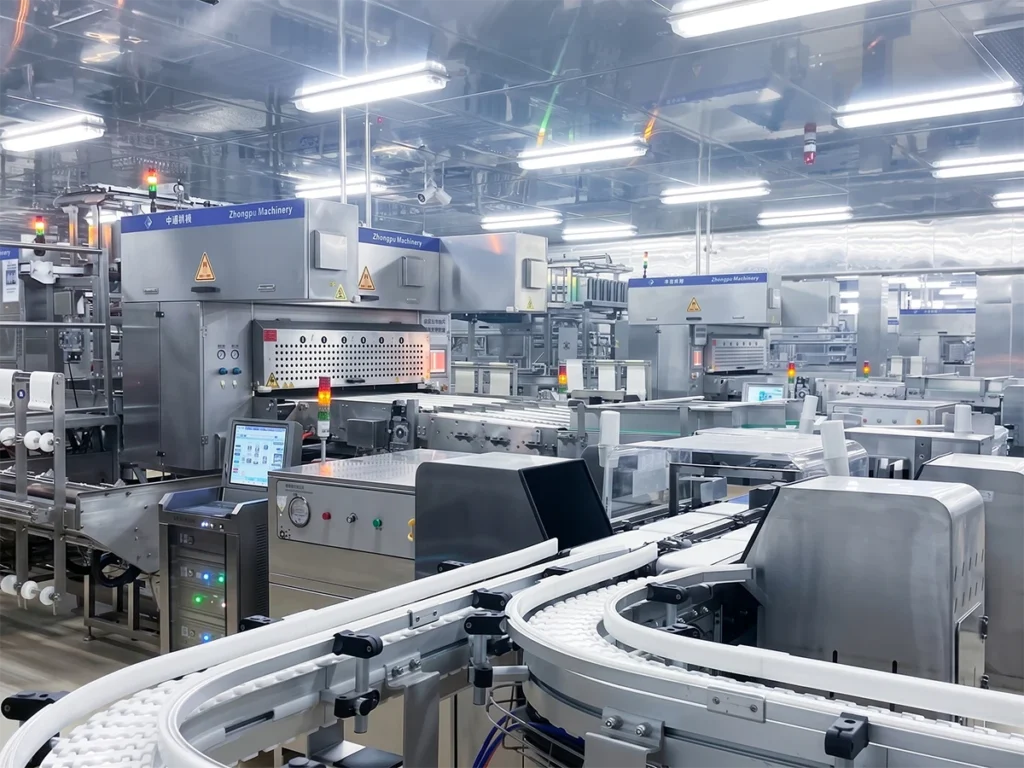
For custom or 3D-shaped ice cream, look beyond a general product catalogue. Examine whether the manufacturer has dedicated 3D production equipment, automated filling and packaging, verified food-safety systems, and experience with cold-chain transportation.
A particularly capable partner may combine more than a decade of ice cream production experience with multiple automated 3D lines, a 100,000-class cleanroom, ISO 22000 certification, internal mold-development expertise, and integrated packaging support.
These capabilities matter because product development does not end when a sample looks good. The same product must be reproduced thousands of times, packed without damage, and delivered while maintaining its shape and texture.
Communication is equally important. A reliable manufacturer should explain what information it needs, which costs are involved, how long sampling may take, and where the main production risks lie.
OEM or ODM: A Simple Decision
Choose OEM if you already have a well-developed product and mainly need manufacturing capacity, quality control, and consistent execution.
Choose ODM if you have a commercial idea but need support with formulation, shape, mold development, sampling, or packaging.
Choose a hybrid approach if some parts of the product are complete while others still require technical development.
The better you understand your own resources, the easier it becomes to select the right model.
Turn the Right Manufacturing Model into the Right Product
Choosing between OEM and ODM is not simply a manufacturing decision. It determines how your idea will be developed, how much responsibility your team will carry, and how quickly the product can move toward the market.
If your specifications are already complete, OEM offers control and efficient execution. If you need help turning an early concept into a practical frozen product, ODM provides a more complete development path.
The strongest manufacturing partners can support both—and know when a hybrid approach will produce a better result.
Have a finished specification, an early sketch, or simply an idea for something the market has never seen?
Contact our team to discuss your product concept, development needs, packaging requirements, and target market.