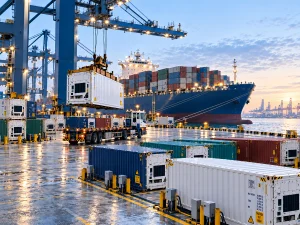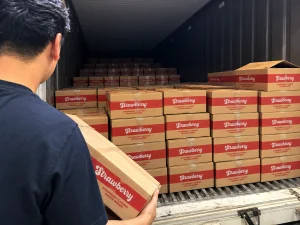
A mango-shaped ice cream should still look like a mango after mass production, packaging, and a long journey in a frozen container.
That sounds simple, but producing detailed 3D ice cream at commercial scale is surprisingly complex. The shape must release cleanly from its mold, remain stable on the stick, preserve its surface details, and survive storage and transportation without becoming damaged or deformed.
China has become an important manufacturing base for creative frozen desserts. However, not every ice cream factory has the equipment or experience required to produce complex 3D products consistently.
Here is how to identify a manufacturer capable of turning a creative idea into a reliable, market-ready product.
Look for Genuine 3D Manufacturing Experience
Traditional ice cream bars are relatively straightforward. Realistic fruits, flowers, landmarks, logos, and characters are not.
Small differences in mold design, filling temperature, freezing speed, or demolding can completely change the finished appearance. An experienced manufacturer understands how ice cream expands and contracts, where fragile areas may break, and which details will remain visible after production.
Before choosing a supplier, examine its existing products carefully. Look for clean edges, accurate colors, natural proportions, and consistency across different designs.
A factory with more than a decade of ice cream manufacturing experience, and a portfolio covering fruit shapes, cultural landmarks, flowers, branded products, and other complex designs, is usually better prepared to solve these challenges.
Automation Makes a Visible Difference
Making one attractive sample is easy compared with producing thousands of nearly identical pieces.
Manual production can lead to variations in filling, product weight, stick position, and surface quality. It may also increase unnecessary contact with the product.
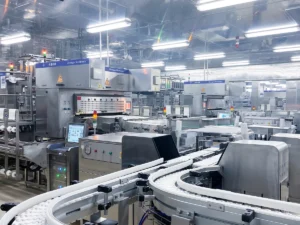
Automation improves both consistency and hygiene. The strongest manufacturers use automatic systems for filling, stick placement, demolding, product transfer, packaging, and cartoning.
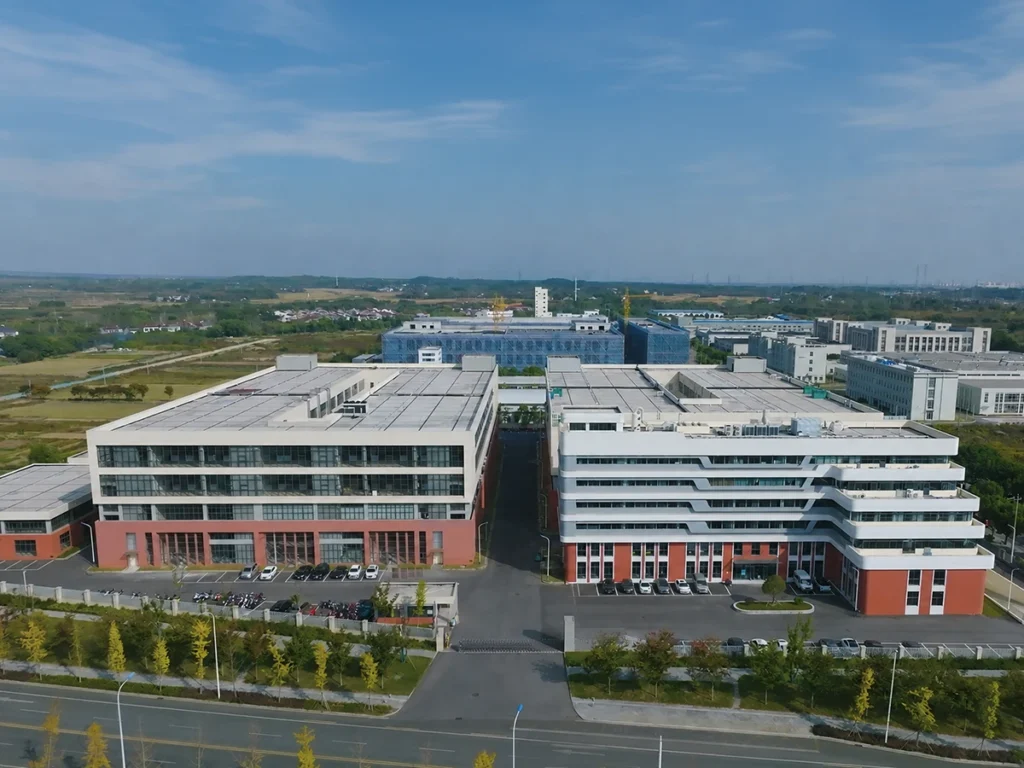
For large commercial projects, look for a factory with multiple dedicated 3D production lines rather than one small experimental setup. A manufacturer operating around 12 specialized 3D lines, supported by automatic packaging equipment, is far more capable of moving from product development to stable mass production.
Food Safety Should Support the Creativity
A visually impressive product is only valuable if it is also manufactured safely.
A reliable supplier should have clear controls covering ingredients, sanitation, temperature, testing, and batch traceability. Certificates should be available for verification rather than mentioned only in sales materials.
ISO 22000 certification is a useful sign that the factory follows a structured food-safety management system. A 100,000-class cleanroom and fully automatic lines designed to minimize human contact provide additional confidence.
These conditions are especially important for private-label buyers. Any quality problem will affect not only the factory, but also the reputation of the brand printed on the packaging.
Look Beyond the External Shape
A successful custom product is not simply an existing recipe poured into a new mold.
The flavor, texture, color, filling, stick, coating, and packaging must all work with the design. A shape with very thin sections may break during demolding. A highly detailed surface may be difficult to protect inside a wrapper. Some color combinations may also require multiple filling stages.
A capable manufacturer will identify these issues before mass production and recommend practical adjustments.
It should also be able to support both OEM and ODM projects. OEM is suitable when the buyer already has a clear recipe and specification. ODM is more helpful when the buyer needs support with the shape, flavor, formulation, packaging, or complete product concept.
The ability to coordinate all these elements through one team can save considerable time during development.
Never Skip the Sample Stage
The sample is where imagination meets manufacturing reality.
Do not evaluate only the appearance. Check the taste, texture, product weight, stick position, color accuracy, and packaging fit. Whenever possible, inspect the product again after frozen storage to see whether the shape and texture remain stable.
A trustworthy manufacturer may suggest simplifying a fragile detail, changing the thickness of one section, or adjusting the packaging dimensions. These recommendations are usually a positive sign. They show that the supplier is thinking beyond the initial photograph and considering the entire commercial life of the product.
The best results often come from collaboration between food scientists, mechanical engineers, designers, production specialists, and logistics professionals.
Make Sure the Factory Can Grow with You
Some suppliers can create an excellent sample but struggle when a product becomes successful.
Before confirming an order, learn about the factory’s production lines, packaging equipment, scheduling capacity, and cold-storage arrangements. Ask whether the same product can be manufactured consistently when the order volume increases.
Multiple dedicated 3D lines provide more than additional output. They also give the manufacturer greater flexibility when managing custom molds, different flavors, packaging changes, and repeat orders.
Choosing a scalable supplier from the beginning helps avoid the cost and risk of moving a successful product to another factory later.
Packaging Is Part of Product Development
Detailed 3D ice cream is more sensitive to pressure and temperature changes than a conventional bar.
If the wrapper presses against the surface, small details may be damaged. If the carton provides insufficient protection, the products may move during transportation. Even a brief rise in temperature can soften the edges or create unwanted ice crystals.
Packaging should therefore be considered while the product is being designed, not after production has already started.
A manufacturer that can coordinate custom packaging, carton configuration, frozen storage, and temperature-controlled shipping is better positioned to protect the product from the production line to its final destination.
Communication Reveals the Quality of a Supplier
Technical equipment matters, but communication often determines whether a custom project runs smoothly.
A reliable supplier should explain mold costs, minimum order quantities, samples, lead times, packaging requirements, and technical limitations clearly. It should provide realistic answers rather than promising that every design will be easy or inexpensive.
Clear communication is especially important when food science, mold engineering, packaging, production, and logistics must work together. A coordinated team can identify problems earlier and reduce repeated revisions.
Do Not Choose on Price Alone
The cheapest quotation can become expensive if it results in repeated sampling, inconsistent shapes, poor packaging, delays, or damaged products.
Instead of comparing only the unit price, consider the complete value offered by each factory. Can it reduce development risk? Can it reproduce the approved sample consistently? Can it support larger orders? Can it protect the product during international transportation?
For a distinctive private-label product, these questions are usually more important than a small difference in price.
A Simple Manufacturer Checklist
Before making a final decision, focus on six essentials:
- Proven experience with complex 3D products
- Automated and scalable production
- Verified food-safety management
- OEM and ODM development capabilities
- Custom packaging expertise
- Reliable cold-chain support
It is uncommon to find all six capabilities equally developed in one factory. A manufacturer that combines more than a decade of experience, 12 dedicated 3D lines, ISO 22000 certification, a 100,000-class cleanroom, integrated customization, and frozen logistics support should naturally stand near the top of a buyer’s shortlist.
Bring Your Idea to Life
Choosing a reliable 3D ice cream manufacturer in China means finding a partner that understands both imagination and engineering.
The right factory should be able to preserve the fine details of a creative design, reproduce it consistently, manufacture it safely, package it securely, and keep it frozen throughout its journey.
When these capabilities exist under one roof, a fruit, landmark, logo, or character can become much more than an interesting concept. It can become a scalable product ready for the international market.
Contact our team to discuss your product idea, target market, packaging requirements, and estimated order volume.