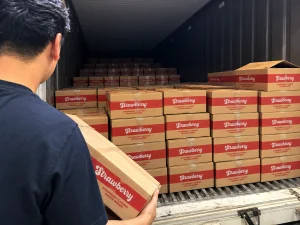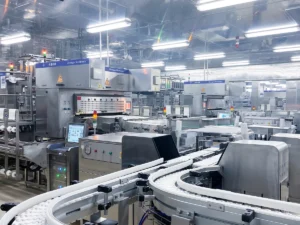
In the competitive world of frozen novelties, visually stunning 3D ice cream products command premium retail prices and drive viral consumer engagement. However, delivering intricate 3D shapes from detailed botanical designs to hyper-realistic novelties across international borders presents a unique logistical challenge.
Unlike solid frozen meats or vegetables, ice cream possesses a delicate, highly complex microscopic structure made of air cells, fat globules, and microscopic ice crystals suspended in an unfrozen sugar matrix.
When temperature fluctuations occur during ocean transit, this structural integrity is instantly threatened by a quiet killer: Heat Shock.
[ Factory-Fresh Smoothness ] ──(Temp Fluctuations)──> [ Recrystallization ] ──> [ Coarse Texture & Deformed 3D Details ]
What is Heat Shock and Why Does It Ruin 3D Ice Cream?
Heat shock occurs when frozen ice cream experiences ambient temperature variations, even if the surrounding environment remains technically below the freezing point.
When temperatures rise slightly, smaller ice crystals within the ice cream matrix melt into the surrounding unfrozen matrix. When the temperature drops back down, that melted water freezes onto neighboring existing ice crystals rather than forming new ones.
The Costly Consequences for B2B Importers:
Loss of Silky Mouthfeel: Microscopic ice crystals grow into large, coarse, grainy crystals that destroy the premium eating experience.
Structural Collapse & Surface Deformation: Rapid thermal shifts cause air cells to collapse, dulling sharp 3D contours, melting fine exterior details, and compromising outer coatings.
Irreversible Brand Damage: Consumers who buy a deformed or icy novelty item will not blame the ocean liner; they will blame the retailer and brand.
Why LCL Logistics Fail and Why FCL Reefer Shipping is Non-Negotiable
A common question from growing distributors is whether small-batch 3D ice cream orders can be shipped via Less-than-Container Load (LCL) or standard express couriers.
The short answer is no. Express couriers (such as DHL or FedEx) and standard LCL consolidation cannot maintain the continuous, ultra-low ambient temperatures (-18°C or colder) required during international transit and customs clearance. LCL services introduce severe risks of temperature spikes during container packing/unpacking and cross-contamination from other food cargoes.
To guarantee that every piece arrives in factory-fresh condition, ice cream exports must strictly utilize dedicated Full Container Load (FCL) reefer shipping.
| Logistics Parameter | LCL Consolidation / Express | Dedicated 40ft HC Reefer (FCL) |
| Temperature Stability | High risk of thermal fluctuation | Continuous sub-zero environment (-18°C to -25°C) |
| Thermal Mass Protection | Low (exposed to varying cargo types) | Maximum (solid frozen cargo load stabilizes temperature) |
| Cross-Contamination Risk | High | Zero |
| Customs Clearance Integrity | Delayed unpacking opens cold chain | Sealed door-to-door delivery |
Maximizing Thermal Mass: The Science of the 40ft High Cube Container
Keeping 3D ice cream flawless during a 30-day ocean voyage isn’t just about setting the reefer dial to -18°C; it is about Thermal Mass.
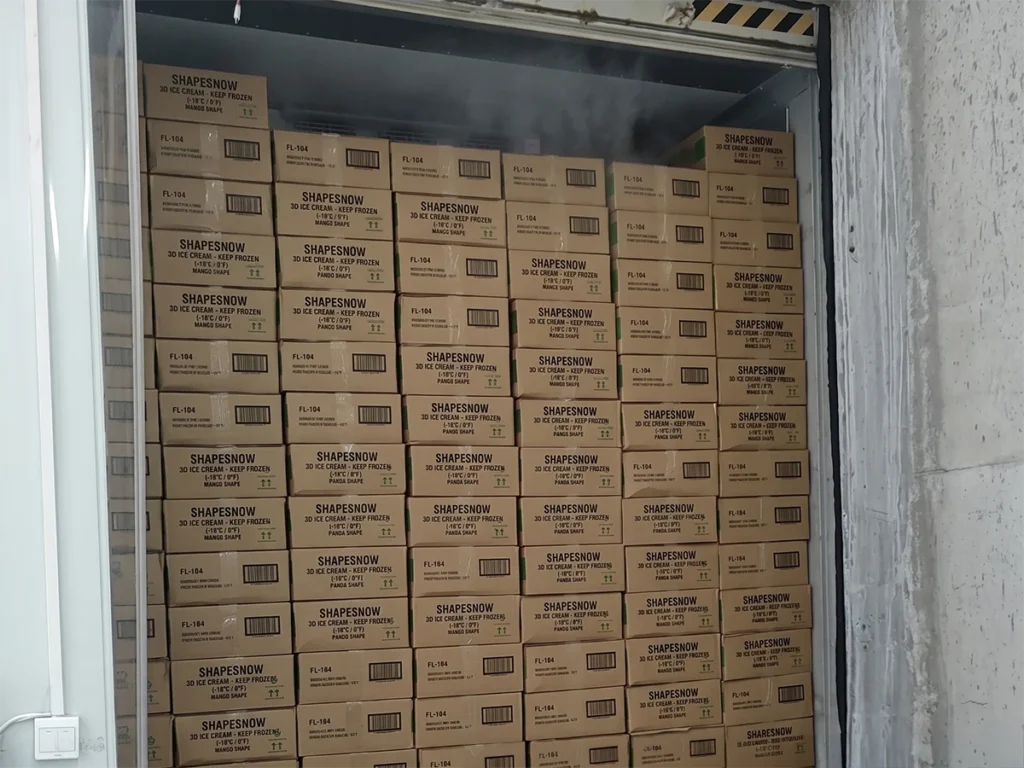
A fully loaded 40ft High Cube (40ft HC) refrigerated container packed with solid, frozen cargo creates a self-sustaining thermal buffer. The cold mass of the frozen products works in synergy with the reefer unit, resisting external ambient temperature changes during port handling and equatorial sea transit.
Flexible Ordering: Mixed-SKU FCL Shipments
While full-container shipping is essential to safeguard the cold chain, distributors do not need to limit themselves to a single product line.
To give global partners maximum market agility, ShapeSnow offers Mixed-SKU FCL shipping. As long as the total order volume fills a 40ft HC container, distributors can mix and match multiple 3D shapes, flavors, and novelties—from viral fruit-shaped novelties to freeze-dried frozen treats—within a single controlled shipment.
End-to-End Cold Chain Transparency: Factory to Destination Port
To uphold uncompromising quality standards, temperature monitoring must never rely on guesswork.
- Pre-Cooling Protocol: Reefer containers are pre-cooled and inspected for seal integrity before loading directly at our specialized automated manufacturing facilities.
- Continuous Data Logging: Advanced continuous temperature monitoring devices track real-time thermal conditions inside the container throughout the entire journey.
- Sealed Transit: Containers remain locked and powered from our factory loading dock through terminal transport, vessel transit, and arrival at your destination port.
Partner with Global 3D Ice Cream Manufacturing Experts
Delivering viral, high-margin 3D ice cream to international markets requires more than creative molds—it demands a robust, scientifically backed supply chain. By pairing state-of-the-art automated manufacturing with strict full-container cold chain protocols, ShapeSnow ensures that every 3D novelty arrives with its sharp details, silky texture, and original form intact.
Ready to expand your frozen dessert portfolio with risk-free B2B supply?